

 Jun 15, 2026
 6 min read
The Day I Realized the Machines Were Watching Me Work
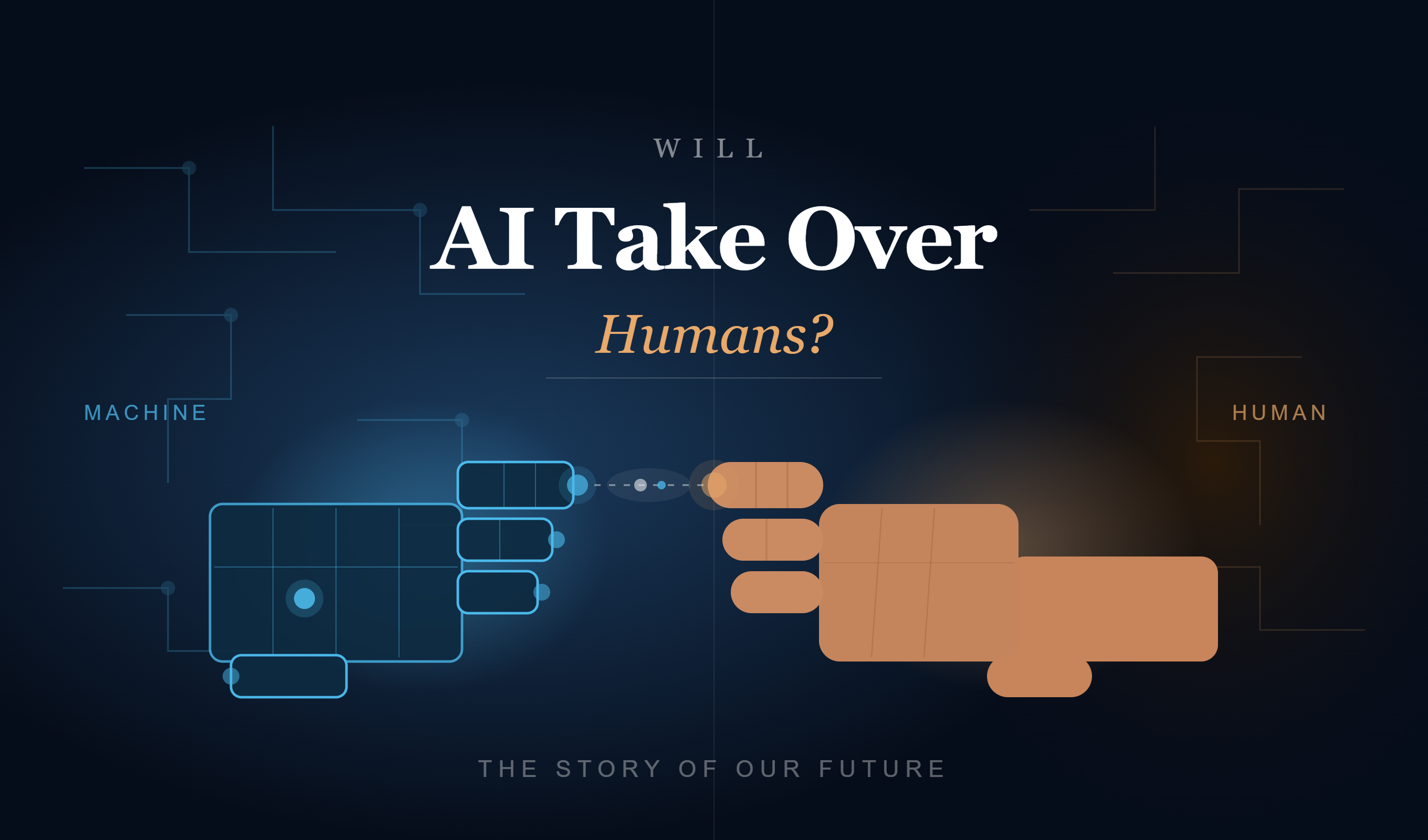
It started with a Tuesday.
Not a dramatic Tuesday. Not the kind of Tuesday that movies are made about. Just a regular, coffee-stained, deadline-chasing Tuesday — when my boss walked into the office and said five words that changed everything:
"The AI finished it overnight."
I stared at the 47-page market analysis report sitting in the shared drive. The one I had been working on for three weeks. The one I had skipped my cousin's wedding for. The one that had stolen sleep from my eyes and peace from my soul.
The AI had done it. In four hours. While I was dreaming.
I laughed. Then I stopped laughing. Then I quietly went to the bathroom and sat there for a very long time, staring at the ceiling tiles and wondering — are we already too late?
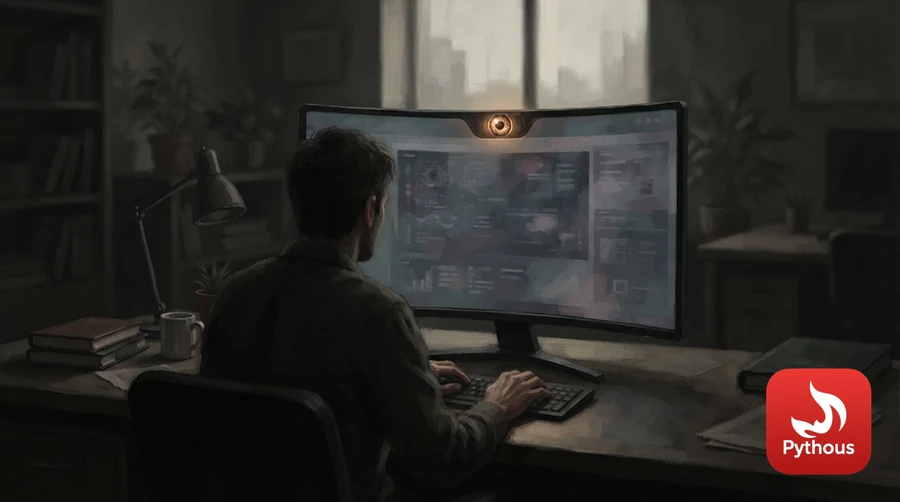
Illustration: the feeling of being watched by the software you work with.
The Question Nobody Wants to Answer Honestly
"Will AI take over humans in the future?"
We've all heard it. We've all rolled our eyes at it. It sounds like a bad science fiction pitch — robots with red eyes, humanity enslaved, dramatic orchestral music swelling in the background.
But here's the thing nobody tells you at the dinner table: the takeover, if it's coming, won't look like a war. It will look like a Tuesday.
It will look like your job posting quietly disappearing from LinkedIn. It will look like a company hiring "fewer people, smarter systems." It will look like a child asking a screen for help with homework instead of asking you — and getting a better answer.
The machines are not coming. In many ways, they are already here. The real question is: what do they want, and what do we do about it?
A Brief History of Human Panic (We've Been Here Before)
Before we spiral into full existential crisis, let's take a breath and look back.
In the 1800s, the Luddites — textile workers in England — smashed machines with hammers. Literal hammers. They were terrified that the industrial revolution would steal their livelihoods. And in some ways, it did. Entire job categories vanished overnight.
But here's what history also shows: humanity adapted. New jobs were created that nobody had imagined before. The economy expanded. Standards of living — eventually, painfully, unevenly — rose.
The same happened with the internet. With electricity. With the printing press. Every generation faces its "this is the end" technology, and every generation finds a way to absorb it, use it, and move forward.
So is AI just another chapter in this long book of human adaptation?
Maybe. Or maybe this time, the chapter is different.
Why This Time Feels Different (And Might Actually Be)
Here is where the story gets unsettling.
Every previous technology replaced physical labor or specific tasks. A tractor doesn't know strategy. A calculator doesn't write poems. A factory robot can't comfort a grieving patient.
But AI? AI is coming for the thinking.
It writes. It codes. It diagnoses. It composes music, generates art, argues legal cases, and passes medical licensing exams. It doesn't get tired. It doesn't ask for a raise. It doesn't have a bad day because its cat knocked over its coffee.
When a machine could only dig faster than you, you could still out-think it. But when a machine can think — when it can learn, reason, and create — the playing field shifts in ways we haven't fully processed yet.
A 2023 Goldman Sachs report estimated that AI could automate tasks that account for 300 million full-time jobs globally. Not replace people entirely, perhaps — but displace enough work to shake the foundations of how society is organized.
That's not science fiction. That's a spreadsheet.
The Two Futures Living Inside Every Possibility
Close your eyes for a moment. (After reading this paragraph, obviously.)
Future One: It's 2045. Diseases that once took years to diagnose are caught in minutes. Climate solutions that stumped scientists for decades are modeled and tested by AI in weeks. Poverty shrinks because productivity explodes. Humans work fewer hours, spend more time with family, pursue art and meaning and connection. AI handles the drudgery; we handle the living.
This future exists. It is genuinely possible.
Future Two: It's 2045. Forty percent of the workforce has been displaced faster than retraining programs could catch up. The wealth generated by AI has pooled at the top — in the hands of the few companies and governments that own the systems. Surveillance is total. Decisions about your loan, your health insurance, your criminal sentencing are made by algorithms no one fully understands and no one can appeal.
This future also exists. It is equally possible.
The difference between them is not technology. The difference is choice. Policy. Governance. The decisions we make right now, while we still have time to make them.
What the Machines Cannot Steal (At Least Not Yet)
I want to tell you something that I believe with the full weight of my human, fallible, coffee-dependent heart:
There are things AI cannot replicate.
Not because it lacks processing power. But because some things are not information — they are experience.
The way a mother knows her child is sick before any symptom appears. The way a great teacher doesn't just explain an equation but makes a student want to understand it. The way a friend sits with you in silence after loss and somehow that silence is the most eloquent thing in the room.
AI can simulate empathy. It cannot feel consequence. It can generate a beautiful sentence about grief. It has never grieved.
This is not a small thing. This is, perhaps, the most important thing.
The future will belong to people who pair human depth with technological tools — not people who try to out-compute a computer, but people who bring to the table what no computer can manufacture: genuine presence, moral courage, and the irreplaceable weight of a life actually lived.
So, Will AI Take Over?
Honestly? Parts of it already have.
Parts of it will continue to. And that is okay — if we are awake to it. If we design the transition thoughtfully. If we ask harder questions about who benefits, who gets left behind, and what kind of world we actually want to live in.
The real danger is not a robot uprising. The real danger is sleepwalking — letting AI absorb role after role, decision after decision, without ever pausing to ask: is this the future we chose, or just the one that happened to us?
We built these systems. We can shape how they grow. The question is not "can AI take over?" The question is: will we let it take over the parts of life that make us most human?
That answer — beautifully, terrifyingly — is still ours to write.
And maybe that's the most human thing of all: the story isn't over. We're still in the middle of it, coffee in hand, deadline looming, figuring it out as we go.
Share this article if it made you think — or made you uncomfortable. Both are good signs.

Comments (0)
Leave a Reply
Log in to post a comment.