

 Jan 19, 2025
 4 min read
‘Dark Oxygen’ Mission Explores Life on Other Worlds
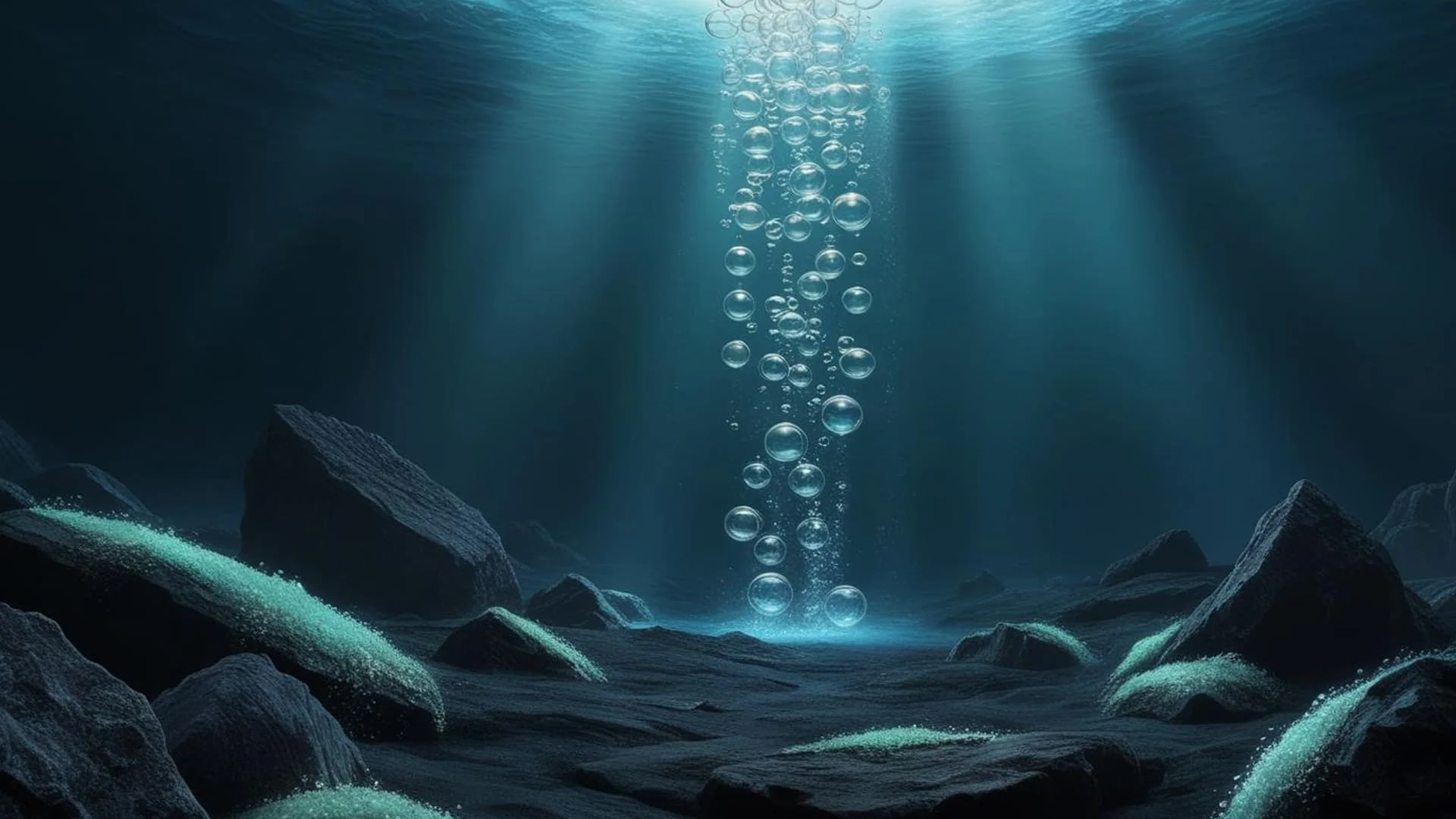
Every biology textbook teaches the same foundational rule: oxygen on Earth comes from photosynthesis, which requires sunlight. In 2024, a study from a research team led by Professor Andrew Sweetman upended that assumption, reporting oxygen being produced on the pitch-black seafloor, thousands of meters below any sunlight — and by metal, not life.
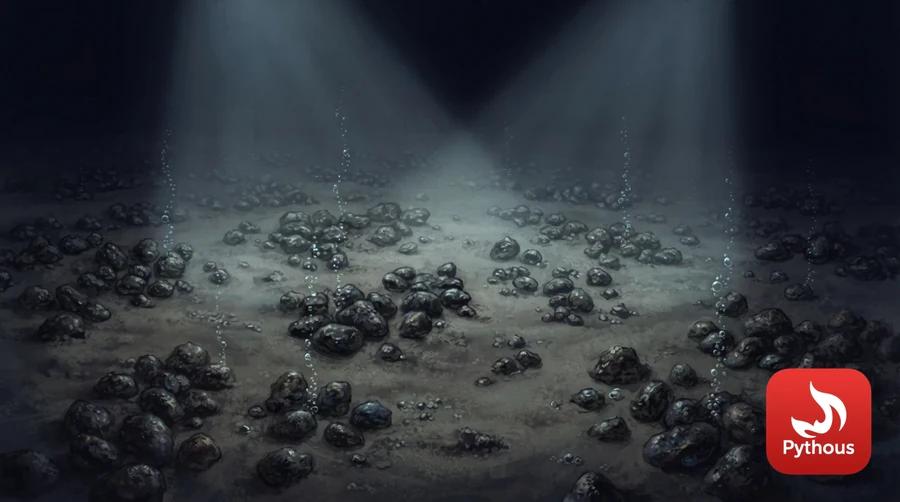
Illustration: polymetallic nodules on the Pacific seafloor, where 'dark oxygen' was reported.
What was actually discovered
Working in the Clarion-Clipperton Zone of the Pacific Ocean — a vast abyssal plain roughly 4,000 to 5,500 meters deep, scattered with naturally occurring polymetallic nodules — researchers measured oxygen levels rising at the seafloor in total darkness, far below where photosynthesis is possible. The proposed explanation: the nodules themselves, which contain manganese, cobalt, nickel, and other metals, can generate small electrical currents on their surface strong enough to split seawater molecules (H₂O) into hydrogen and oxygen — a process the team dubbed "dark oxygen production," essentially a naturally occurring geological version of electrolysis, the same basic chemistry used to split water in a lab or industrial setting.
Professor Sweetman described the implications directly: "This could reshape our understanding of how life might be sustained on other planets without direct sunlight."
Why this matters beyond one patch of ocean floor
The biology-defining assumption that oxygen requires photosynthesis has shaped how scientists search for habitable conditions elsewhere in the solar system and beyond — worlds without a source of sunlight-driven photosynthesis (such as the subsurface oceans thought to exist under the icy crusts of moons like Europa or Enceladus) have generally been considered less promising for sustaining oxygen-dependent life. If a purely geochemical process can generate oxygen without any biology involved, it meaningfully widens the range of environments astrobiologists consider worth investigating — part of why the research team has been collaborating with NASA to explore the implications for the search for microbial life elsewhere in the solar system.
An unusually high-stakes controversy
The discovery arrived in the middle of an already tense, high-stakes debate: those same polymetallic nodules are also a major target for deep-sea mining, since they're rich in metals — including cobalt and nickel — that are essential for manufacturing batteries for electric vehicles and renewable energy storage. That timing turned a scientific finding into a flashpoint.
- Environmental concern — if the nodules themselves are actively producing oxygen that may support deep-sea ecosystems, large-scale mining that removes them could disrupt a process that hadn't even been identified until this research, adding a new dimension to already-significant concerns about deep-sea mining's ecological impact.
- Scientific pushback — some researchers questioned whether the oxygen readings could be explained by instrumentation or methodological issues rather than a genuine geochemical process. Sweetman has defended the findings and pointed to further experiments intended to provide more conclusive evidence — a normal, healthy part of how genuinely novel scientific claims get tested and either strengthened or overturned through independent scrutiny.
A regulatory race running in parallel
The seafloor's metal deposits formed over millions of years and represent one of the largest untapped mineral reserves on the planet, at a moment when global demand for battery metals is rising sharply alongside the shift toward electric vehicles and renewable energy. Mining companies and some national governments have pushed to move forward with commercial seabed extraction. In response, several hundred marine scientists have signed public statements calling for a moratorium on deep-sea mining until the ecosystem — including, now, this newly identified oxygen-production process — is better understood.
Sweetman's own framing of the stakes: "Before we act, we must fully understand the deep-sea ecosystem. As a global society, we need to decide if mining is the right course."
Where this leaves the science
Independent of how the mining debate resolves, the "dark oxygen" finding has opened a genuinely new research direction: investigating whether similar mineral-driven electrochemical processes could occur elsewhere in the solar system, and what that would mean for where scientists look for the basic chemical conditions life depends on. It's also a useful reminder that some of Earth's own deep-ocean environments remain less explored, in real terms, than the surface of the Moon — discoveries with this scale of implication are still very much possible in our own planet's least-visited places.
Frequently Asked Questions
Does this mean life doesn't need sunlight after all? Not directly — the finding is about oxygen production through geochemistry, not about life itself being found. What it changes is the assumption that a lack of sunlight rules out oxygen-rich environments, which matters for where scientists consider looking for habitable conditions.
Has the finding been independently confirmed? It generated real scientific debate on publication, including questions about methodology, and further research has been ongoing to test and refine the original findings — as is standard for a claim this significant, replication and independent scrutiny are central to how it gets fully established.
What's the connection to electric vehicle batteries? The same polymetallic nodules that may be producing this oxygen contain metals like cobalt and nickel that are in high demand for EV and renewable-energy batteries, which is why deep-sea mining companies are targeting exactly this part of the ocean floor — creating the direct overlap between this scientific discovery and the mining controversy.



Comments (0)
Leave a Reply
Log in to post a comment.